What is the best curve tracer for global buyers?
In the world of electronic testing, a curve tracer holds great significance. This valuable instrument helps professionals analyze and characterize the behavior of electronic components. Its ability to display voltage-current characteristics makes it indispensable for both engineers and technicians alike.
Selecting the best curve tracer can be challenging, especially for global buyers. Various factors impact the decision-making process. Each model offers distinct features and capabilities tailored to different needs. Quality, accuracy, and ease of use are essential criteria for any buyer.
As buyers navigate this landscape, they must remember that the ideal curve tracer balances performance with cost efficiency. Some may overlook specific details, leading to regrettable purchases. It requires careful evaluation and, often, a bit of trial and error to find the right fit. Understanding these nuances can lead to more informed choices, ultimately enhancing the quality of work in electronic testing.
Overview of Curve Tracers and Their Applications
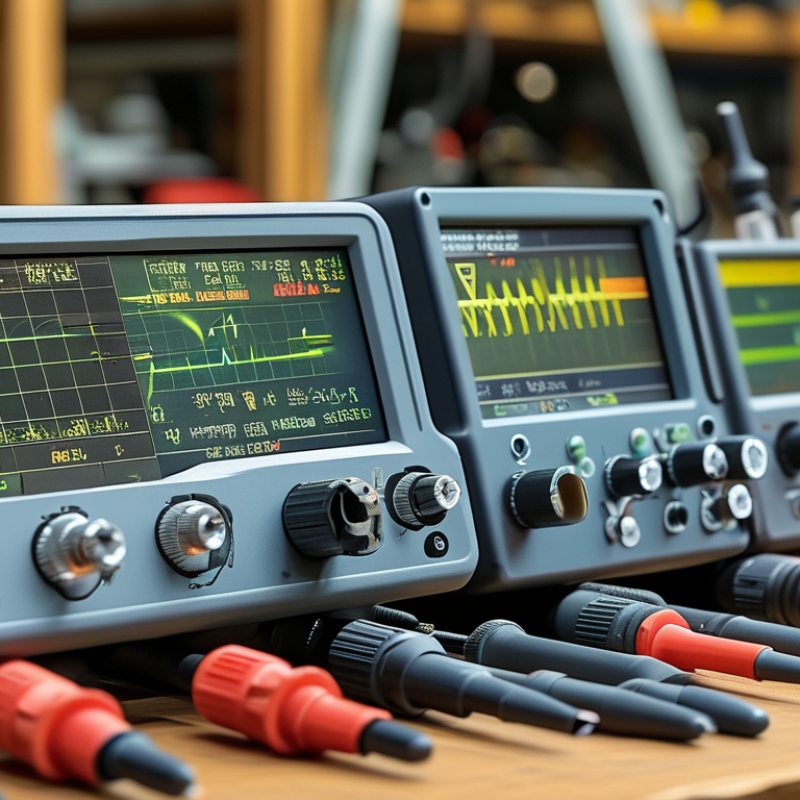
Curve tracers are essential tools for electronic professionals and enthusiasts. They provide a graphical representation of the current-voltage (I-V) characteristics of a device, such as diodes and transistors. By simplifying the testing process, curve tracers help users to understand device behavior under varying conditions.
In various applications, curve tracers are used to analyze semiconductors, characterize photovoltaic cells, and evaluate active circuit components. Their versatility crosses numerous disciplines, including research, manufacturing, and education. Users can visualize how a device performs in real time, aiding in the detection of problems like leakage currents or breakdown voltages. This capability fosters deeper insights, enhancing design accuracy and reliability.
Despite the advantages, some users may struggle with interpreting the traces, especially without experience. Curve shapes can be complex and misleading at first glance. It's important to approach these tools with a critical mindset. Gaining proficiency might require practice and collaboration with knowledgeable peers. This trial-and-error process is vital for improving understanding and technique. Thus, while curve tracers serve a key role in electronics testing, users must be prepared to invest time in learning.
Key Features to Consider When Choosing a Curve Tracer
Choosing the right curve tracer involves several critical features. One important factor is measurement accuracy. A precise curve tracer can greatly enhance your ability to analyze electronic components. Look for models that provide detailed voltage and current readings. This precision helps in understanding the component’s behavior under real-world conditions.
Another key aspect is versatility. A good curve tracer should handle a wide range of components, from diodes to transistors. This is particularly important for engineers and designers who often work with various devices. Moreover, consider ease of use. Intuitive interfaces save time and reduce errors during testing.
Portability can also be vital, especially for fieldwork. Lightweight designs that are easy to transport can improve your workflow significantly. Lastly, think about durability. A robust build withstands wear and tear. Testing equipment should endure various environments, reflecting your real-world needs. Balancing these features is essential but can be challenging. Reflection on your specific requirements will guide you in making the right decision.
Top Curve Tracer Models for Global Buyers in 2023
Curve tracers are essential tools for electronic testing. Their primary function is to provide a graphical representation of a device's current-voltage characteristics. For global buyers, choosing the best model involves understanding key features and performance metrics. In 2023, several models stand out, catering to a wide range of needs.
When selecting a curve tracer, consider voltage range. A model that supports both high and low voltage ranges offers versatility. Look for a device with a clear display, allowing easy observation of results. Ensure it has sufficient resolution for accurate readings. Many models now include software integration for better data management and analysis, a feature worth exploring.
For effective use, always calibrate your curve tracer before testing. This practice ensures reliable results. Use protective equipment when handling high-voltage components, as safety is paramount. Regular maintenance of the tracer can help mitigate inaccuracies over time. Staying informed about model updates can also enhance performance. Seek online reviews and user experiences to guide your decision.
Comparative Analysis of Curve Tracers by Brand and Price
When comparing curve tracers, various brands offer distinct features at different price points. Some models excel in high-frequency response, while others focus on low-cost accessibility. A solid understanding of specifications is crucial. Users often overlook how these specs translate into real-world performance. For instance, some tracers may struggle with dynamic loads, creating challenges during testing.
Price is not the only factor. Affordable models may lack advanced capabilities, yet they can be suitable for basic applications. Users should also consider reliability and support from manufacturers. Quality control issues sometimes arise in budget products, leading to inconsistent results.
On the other hand, high-end options frequently come with robust software integration. This can enhance usability but raises the initial purchase threshold. Users must weigh the benefits against their actual needs. Reflect on whether the advanced features justify the investment, especially for occasional use. Balancing performance with budget can be tricky, requiring careful evaluation.
What is the best curve tracer for global buyers? - Comparative Analysis of Curve Tracers by Brand and Price
| Model |
Max Voltage (V) |
Current Range (mA) |
Features |
Price (USD) |
| Model A |
300 |
10-100 |
Digital Display, High Accuracy |
$450 |
| Model B |
400 |
5-200 |
Multiple Waveforms, USB Connectivity |
$600 |
| Model C |
200 |
1-50 |
Compact Design, Battery Operated |
$300 |
| Model D |
600 |
20-500 |
Graphing Function, Software Included |
$750 |
User Reviews and Recommendations for Optimal Curve Tracers
Selecting the best curve tracer requires careful consideration of user experiences. Many global buyers emphasize durability and ease of use. A reliable device should withstand regular testing and offer consistent performance. Users often mention the importance of a clear interface. When a device is simple to navigate, it enhances productivity and reduces errors during operation.
In user reviews, features like accurate measurement and diverse testing options are highlighted. Many users appreciate models that come with detailed manuals. A well-explained guide can significantly ease the learning curve. Some users, however, express frustration over complex setups. Finding a balance between advanced features and user-friendliness appears crucial.
Feedback also reveals that price can be a decisive factor. Some buyers are hesitant to invest heavily without seeing beneficial returns. They often echo the sentiment for value over mere brand prestige. Each purchase decision should consider the specific needs of users. Reflections from the community can help new buyers navigate through their options better.
What is the best curve tracer for global buyers?