What Is the Best Wafer Testing Service in China?
What is the best wafer testing service in China? The answer depends on more than price, equipment, or factory size. It requires measurable process control, stable capacity, and proven experience with the target device. A strong provider should support wafer probing, parametric testing, failure analysis, data traceability, and rapid engineering changes. It should also explain its limits clearly.
The market is becoming harder to judge. SEMI reported that China remained the world’s largest semiconductor equipment market in 2024, with approximately US$49.4 billion in sales. This investment is expanding local manufacturing capacity, but capacity does not automatically mean reliable testing. The WSTS forecast placed global semiconductor sales near US$627 billion in 2024, increasing pressure on yield, delivery time, and quality data. These figures show opportunity. They also show risk.
As semiconductor test expert John P. Hess has said, “Testing is the insurance policy of the semiconductor industry.” That insurance must work at wafer level. A dependable Chinese service should provide clear probe-card compatibility, documented calibration, controlled cleanroom handling, and sample test reports. Look for concrete evidence, such as defect maps, retest rates, turnaround times, and customer audit results. Ask difficult questions.
A lower quotation can still become expensive. Weak data creates hidden losses. No provider is perfect, and published capabilities may not reflect current production performance. The best wafer testing partner is therefore the one that can demonstrate repeatable results, communicate problems early, and improve with every lot.
What Is Wafer Testing and Why Does It Matter?
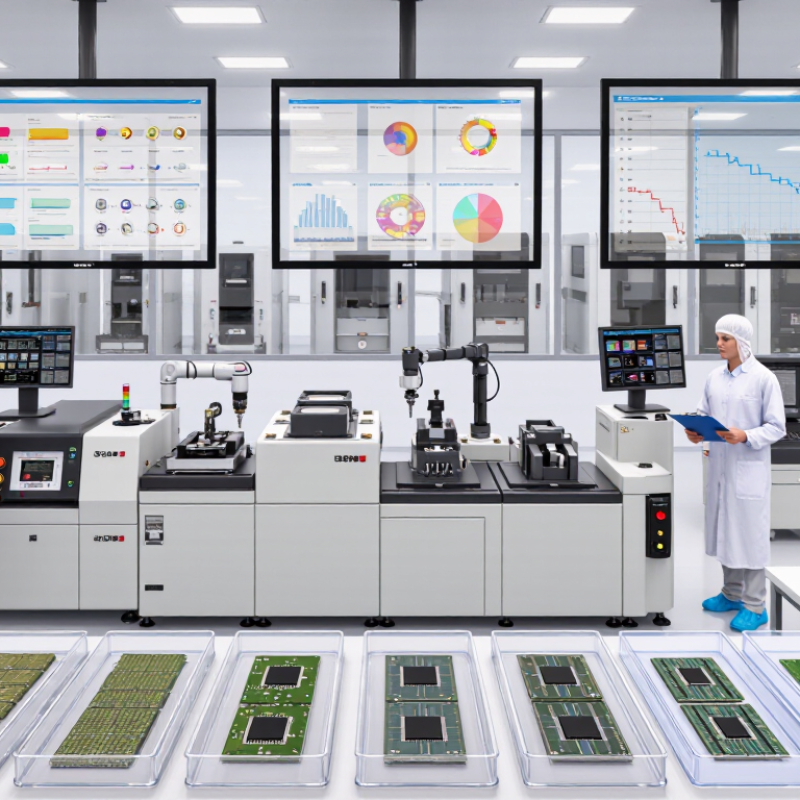
Wafer testing checks whether semiconductor dies perform correctly before they are separated from the wafer. Engineers apply electrical signals through tiny probe needles. They measure leakage, power use, timing, and response across different temperatures. A single wafer may contain thousands of identical dies, but results are rarely perfectly uniform.
This process matters because early testing prevents weak dies from entering expensive packaging and assembly stages. It also reveals process variations, contamination, alignment problems, and unstable electrical behavior. In practical testing environments, clean equipment and calibrated instruments are essential. Experienced technicians review test maps, compare wafer lots, and investigate unusual patterns instead of accepting every result automatically. No test plan is perfect. Some failures may come from contact issues rather than the die itself.
Tips: Choose a testing service with traceable calibration records, controlled cleanroom procedures, and clear reporting. Ask how engineers confirm probe contact and manage retesting. Reliable providers should explain yield data in practical language, not only provide attractive charts. Testing speed also matters, but accuracy matters more. A rushed measurement can create costly decisions. When evaluating wafer testing services in China, consider technical experience, communication quality, data security, and the ability to support your device type and production volume. Small details often decide whether test results are genuinely useful.
Which Capabilities Define a Leading Chinese Wafer Testing Service?
What Is the Best Wafer Testing Service in China?
Which Capabilities Define a Leading Chinese Wafer Testing Service?
A leading wafer testing service combines accurate probing, stable processes, and experienced engineering judgment. It should test logic, memory, analog, power, and radio-frequency devices under controlled conditions. Probe card compatibility matters, especially for fine-pitch pads and advanced wafer designs. Clean handling is essential. Small particles can distort results.
Strong facilities support parametric testing, functional testing, burn-in, and temperature cycling. They can examine wafers across a wide temperature range, from cold-start conditions to elevated operation. Automated wafer mapping helps locate edge defects and repeated failure patterns. Reliable services also provide calibrated equipment, documented procedures, and traceable data. Engineers should explain unusual results instead of simply sending a spreadsheet.
Data quality defines real value. A useful report links each die result to its wafer position, test condition, and timestamp. Yield analysis should reveal trends, not hide them behind one percentage. Secure data transfer and controlled access also protect sensitive project information. Communication speed matters when production decisions depend on test results.
No testing system is perfect. False rejects can occur because of contact wear, unstable temperature, or poor setup. Experienced teams use retesting and correlation checks to separate device failures from test errors. This step is easy to overlook. It deserves careful review. A dependable Chinese wafer testing service keeps improving its methods, equipment, and technical communication.
What Defines a Leading Wafer Testing Service in China?
Wafer-size coverage is a fundamental capability indicator. Semiconductor manufacturing commonly uses
150 mm, 200 mm, and 300 mm wafers. A competitive wafer testing service should support the wafer formats
required by the customer’s process, together with automated probing, parametric testing, RF or power testing,
temperature testing, traceability, and reliable data delivery.
How Do Chinese Wafer Testing Providers Differ in Expertise?
Choosing the best wafer testing service in China depends less on location and more on technical expertise. Providers differ in the wafer types, devices, and test conditions they handle every day. Some focus on high-volume digital wafers, where stable throughput and automated wafer mapping matter most. Others specialize in analog, power, radio-frequency, or sensor devices. These products often require tighter electrical measurements and more careful temperature control.
A capable provider should explain its testing experience with clear evidence. Ask how it manages probe-card selection, calibration records, test-program verification, and abnormal data. A clean test floor is useful, but traceable results matter more. Look for detailed yield reports, retest rules, and failure-analysis support. Engineers should understand both the equipment and the device physics. Short answers can be a warning sign.
Matching Testing Capabilities to Device Requirements
Advanced-node testing may require fine-pitch probing and strict process control. Mature-node projects may instead depend on cost stability and reliable cycle times. Some facilities support engineering lots and rapid program changes. Others are better suited to repeated production orders. That difference can affect schedules significantly. No provider is strongest everywhere. A service may have excellent automation but limited experience with unusual materials or fragile structures. Another may offer deeper engineering support, yet need more time for large-volume testing. In practice, a trial lot often reveals more than a sales presentation. Check measurement consistency across wafers, lots, temperatures, and operators. The best choice is the team whose proven experience matches your device risks.
What Factors Should Buyers Consider When Comparing Services?
What Is the Best Wafer Testing Service in China?
Buyers should compare technical capability before comparing prices. SEMI’s 2024 World Fab Forecast expects global capacity to exceed 30 million eight-inch-equivalent wafers monthly in 2025. That scale increases pressure on test providers. Ask whether the facility supports your wafer size, device type, probe card design, and required temperature range. A provider should also explain its test coverage, measurement uncertainty, and failure-analysis process in plain language.
Data security and traceability matter just as much. Check for ISO 17025 laboratory competence, controlled calibration records, and lot-level reporting. Review sample reports before signing. Can engineers identify a weak die, wafer map pattern, or sudden yield shift? Yole Group’s 2024 advanced packaging research estimates the market could grow from about $46 billion in 2023 to nearly $79 billion by 2029. More complex packages often require tighter electrical, thermal, and structural testing. Cheap testing may miss expensive defects.
Capacity is another practical concern. Request recent utilization figures, average turnaround time, retest rates, and equipment redundancy. Ask how the team handles probe damage or unexpected wafer warpage. Experience shows that communication delays can cost more than testing fees. I would not trust impressive equipment lists alone. Some facilities advertise broad capabilities but outsource critical analysis. That deserves scrutiny. A short pilot lot can reveal reporting quality, operator discipline, and real process stability. Even then, results may vary between product families. Test comparisons should remain cautious.
How Can Companies Choose the Best Wafer Testing Service in China?
Choosing the best wafer testing service in China requires more than comparing hourly prices. Companies should examine technical fit, measurement discipline, communication, and evidence from similar projects.
Start with the device. Ask whether the laboratory can test the wafer size, process node, package type, and electrical range involved. Probe-card compatibility matters, especially for fine-pitch pads and high-pin-count devices. For RF, power, or optical products, confirm the required instruments and calibration intervals. Request sample test reports with raw data, retest records, yield charts, and failure classifications. Clear data ownership and secure file transfer are also essential.
A practical evaluation should include a facility visit or live equipment review. Check wafer handling, cleanroom controls, temperature testing, ESD protection, and lot traceability. The service team should explain fixture design, test limits, sampling plans, and how abnormal results are investigated. Ask about engineering support in China, response times, language capability, and shipment procedures. A low quotation may exclude probe-card changes, setup fees, or repeated tests. That detail is easy to miss.
Do not trust polished presentations alone. A recent audit may reveal gaps. Companies should run a small qualification lot before approving mass testing. Compare correlation results with internal equipment, not just the final pass rate. Even experienced teams can choose the wrong test conditions when requirements are incomplete. Document every assumption, review the first data closely, and keep room for process correction.