How to Choose a Police Drone Detector for Global Buyers?

Choosing a Police Drone Detector is not simply a matter of selecting the longest detection range. Global buyers must consider local aviation rules, privacy requirements, operating environments, and the responsibilities of authorized public safety teams. A suitable system should support lawful awareness, not unauthorized interference or unsafe responses.

In practical evaluations, buyers should examine radio-frequency coverage, detection accuracy, identification methods, weather resistance, battery life, and alert speed. A busy city may create more false alarms than a quiet training ground. Concrete walls, rain, trees, and nearby wireless equipment can also reduce performance. Test reports should explain these conditions clearly, rather than presenting only ideal laboratory results. Look for transparent specifications.

Experience matters. Ask suppliers for supervised demonstrations, maintenance records, software update policies, and references from comparable public safety organizations. Operators should receive documented training, especially when the detector connects with approved security platforms or incident management systems. Data handling deserves equal attention. Access controls, audit logs, secure storage, and limited retention can help protect the public and the organization.

No detector performs perfectly.

That is worth remembering.

A reliable purchasing decision compares independent testing, manufacturer evidence, and field observations. Buyers should also confirm regional certifications, technical support availability, warranty coverage, and replacement-part access before signing a contract. A lower purchase price may become expensive when calibration, training, or integration costs appear later. This guide explores how to compare a Police Drone Detector responsibly, with practical criteria for airports, critical infrastructure, event venues, and other authorized environments. The best choice is not always the most advanced model. It is the system that performs predictably, respects applicable rules, and remains useful under real operating conditions.

How to Choose a Police Drone Detector for Global Buyers?

Understanding the Role of Police Drone Detectors

How to Choose a Police Drone Detector for Global Buyers?

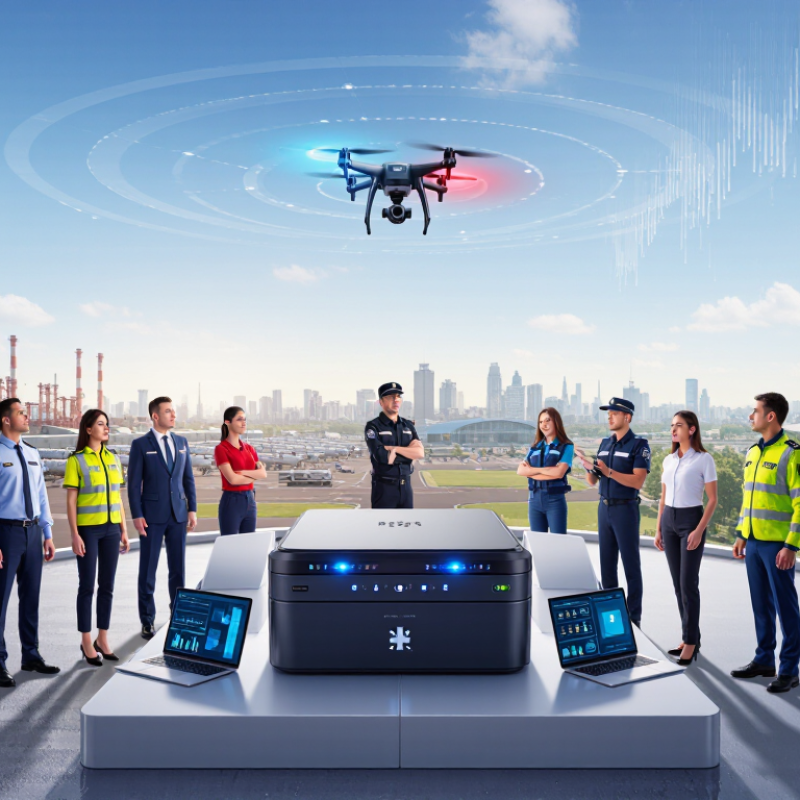
A police drone detector supports awareness, not automatic enforcement. Its role is to identify possible drone activity near protected locations. This information helps trained teams assess risks, protect public spaces, and coordinate a lawful response. In practice, officers may need alerts beside busy roads, stadiums, or emergency scenes. Detection must remain clear despite buildings, weather, and radio interference.

Look for reliable detection range, alert speed, and stable performance in local conditions. A system should explain what it detects, rather than produce confusing warnings. Useful features may include direction estimates, event logs, and integration with approved command platforms. Data handling also matters. Buyers should confirm privacy controls, secure storage, and compliance with national radio and information regulations.

No detector is perfect. Signal reflections can create false alerts, while quiet or unusual environments may reduce accuracy. This limitation deserves honest testing. Ask suppliers for independent test information, maintenance details, training support, and realistic performance figures. A short field trial can reveal more than a polished specification sheet. Operators should record missed alerts and confusing results, then adjust procedures. Global buyers also need local service capacity, language support, and clear warranty terms. The best choice strengthens responsible decision-making without replacing human judgment.

How to Choose a Police Drone Detector for Global Buyers?

Understanding the role of police drone detectors starts with identifying the radio-frequency bands they can monitor. The chart shows internationally recognized navigation and communication bands commonly associated with unmanned aircraft systems. Buyers should also evaluate detection range, false-alarm control, direction finding, data logging, weather resistance, and compliance with local radio regulations.

Reference values: GNSS L1 at 1.57542 GHz, GNSS L2 at 1.22760 GHz, the 2.4 GHz ISM band, and the 5.8 GHz ISM band. Actual drone link configurations vary by model, region, and operating mode.

Defining Operational Requirements and Detection Scenarios

How to Choose a Police Drone Detector for Global Buyers?

Defining Operational Requirements and Detection Scenarios

A police drone detector should begin with the mission, not the advertised range. At an airport perimeter, detection may need early warning across open ground. In a crowded square, accuracy and low false alarms matter more. The Federal Aviation Administration reported over 800,000 registered drones in the United States by 2024. That figure shows why urban detection environments are becoming more complex.

Map each scenario carefully. Record the expected drone size, flight height, weather, buildings, and nearby radio activity. A 2024 European Union Aviation Safety Agency report emphasizes risk-based operations and reliable identification within controlled airspace. Therefore, buyers should compare radio-frequency detection, radar, optical confirmation, and acoustic sensing. One sensor rarely performs equally well in every setting.

Test the system during rain, heavy traffic, and crowded public events. Ask for measured results, not laboratory claims. The International Civil Aviation Organization continues to promote information sharing and aviation safety coordination, which supports standardized logs and incident records. Detection range can change sharply near concrete walls or wireless networks. That detail is easy to overlook. I would also question whether the detector distinguishes a drone from ordinary radio equipment. Some procurement decisions focus too heavily on distance. That is not always the right answer.

Comparing Detection Technologies and Performance Metrics

How to Choose a Police Drone Detector for Global Buyers?

Detection technology should match the operating environment, not marketing claims. Radio-frequency sensors can identify control links and Remote ID signals from a distance. Radar adds tracking when signals are weak or unavailable. Electro-optical and infrared cameras can support visual confirmation, but rain, darkness, and glare reduce their value. Acoustic sensors may help in quiet areas, yet traffic noise quickly lowers confidence. A layered system is usually stronger than one sensor.

Measure probability of detection, false-alarm rate, detection range, classification accuracy, and alert latency. Ask for results across urban clutter, trees, rain, and crowded radio bands. FAA’s Aerospace Forecast 2024–2044 projects the U.S. commercial small-UAS fleet could exceed 900,000 aircraft by 2028. That growth makes reliable identification more important than impressive maximum range. A five-kilometre claim means little if detection fails behind buildings.

Look for independently witnessed trials and repeatable test conditions. NIST research on UAS evaluation highlights measurable detection, tracking, and identification performance rather than simple “detected” claims. Require timestamped logs, calibrated sensors, secure data handling, and compatibility with existing command systems. Confirm local aviation, privacy, and radio-frequency requirements before purchase. No detector is perfect. Field performance can still disappoint. A sensible buyer should compare median results, worst-case results, and maintenance needs. Periodic retesting matters because firmware, city infrastructure, and radio traffic change over time.

Evaluating Legal, Security, and Environmental Factors

Choosing a police drone detector for global operations requires more than comparing detection range. Start with local laws governing radio monitoring, privacy, data retention, and public-sector procurement. Some jurisdictions restrict passive spectrum analysis near airports, courts, or critical infrastructure. Ask qualified legal counsel to review deployment plans before testing equipment. In my field evaluations, clear documentation often prevents more trouble than impressive specifications. Detection should support lawful safety work, not encourage unauthorized interference.

Tips: Request certificates, test reports, and a written explanation of detection methods. Confirm whether the device identifies control links, navigation signals, or unusual radio activity. Check false-alarm rates in dense urban areas, where Wi-Fi, construction equipment, and emergency systems create noise. Use geofencing and role-based access for stored alerts. Keep logs short, encrypted, and accessible only to trained personnel. A useful dashboard is worthless if officers cannot interpret it under pressure.

Environmental performance also matters. Select equipment rated for local heat, rain, dust, and cold. Verify battery behavior in real conditions. Lower power use reduces vehicle charging demands, but weak hardware may require repeated patrols. Consider repairability, replaceable batteries, and responsible electronic-waste handling. Noise and visible lighting can disturb residents and wildlife during night operations. No detector is perfect. Review missed alerts and false alarms after each deployment, then revise procedures when evidence exposes a gap.

Selecting a Reliable Detector for Global Police Operations

Choosing a reliable drone detector for global police operations requires more than comparing detection distance. Field teams should assess radio-frequency coverage, sensor accuracy, weather resistance, and ease of deployment. A unit may perform well during testing but struggle near tall buildings, heavy traffic, or crowded event sites. Real-world trials matter.

Operational compatibility is equally important. The detector should provide clear alerts, readable data, and secure records for authorized investigations. Teams must review local aviation rules, privacy requirements, and procurement standards before deployment. Independent testing reports and transparent technical documentation can support a more defensible purchase. No detector is flawless. False alerts still happen, especially around dense wireless networks.

Tips: Test equipment during day and night shifts. Ask operators to use it in rain, heat, and complex urban locations. Check battery life, software updates, repair support, and training materials. Avoid systems that promise perfect identification. That claim deserves scrutiny. Choose equipment that allows controlled settings, audit trails, and routine calibration. A practical detector should help officers make informed decisions, not replace professional judgment. Feedback from daily users often reveals weaknesses that brochures miss. Consider that lesson.

How to Choose a Police Drone Detector for Global Buyers? – Selecting a Reliable Detector for Global Police Operations
Selection Dimension Recommended Procurement Benchmark Operational Relevance Verification Method
Detection Technologies Use a layered architecture combining RF detection with protocol analysis; add radar, remote identification, or electro-optical confirmation when the mission requires non-emitting target detection. RF-only systems may not detect autonomous drones, frequency-hopping links, or aircraft operating without an active control signal. Test against RF-controlled, Wi-Fi-controlled, autonomous, and low-emission flight profiles in representative environments.
RF Frequency Coverage At minimum, assess coverage of commonly used sub-GHz, 2.4 GHz, and 5 GHz control or telemetry ranges. Consider regional bands above 5 GHz where legally and operationally relevant. Consumer and professional unmanned aircraft use multiple radio technologies, and frequency allocations differ by country. Request a frequency coverage chart, supported waveform list, scan speed, and evidence of testing across the target deployment countries.
Detection Range Specify range by environment rather than accepting a single headline figure. Establish separate targets for open terrain, dense urban areas, and indoor or perimeter use. Buildings, terrain, vegetation, antenna height, transmit power, interference, and line of sight can substantially change detection distance. Require a site acceptance test with measured detection probability at defined distances and approach directions.
Detection Probability Set a mission-specific target, such as at least 90% detection probability for the selected test set, and define the confidence level and test conditions. A percentage without a defined target population, distance, altitude, and environment cannot be compared reliably. Use repeatable trials with multiple aircraft types, flight paths, altitudes, weather conditions, and radio configurations.
False Alarm Control Require documented nuisance-alarm performance and configurable exclusion zones, signal libraries, alert priorities, and operator confirmation workflows. Urban public-safety environments contain Wi-Fi, cellular, Bluetooth, industrial, and broadcast signals that can create unwanted alerts. Conduct a 24-hour or longer observation test at the intended site and record false alerts per hour by source category.
Identification Capability Prefer systems that report estimated direction, signal type, protocol or waveform classification, confidence level, and time-stamped event data. Detection alone may not provide enough information for dispatch, evidence handling, or coordinated response. Check whether alerts can be exported in standard formats and correlated with maps, cameras, radar, or command systems.
Remote Identification Support Assess support for the Remote ID requirements applicable in the target jurisdiction, including broadcast reception and data fields required by local aviation authorities. Remote identification rules are jurisdiction-specific and may change; support should not be assumed solely from a product description. Confirm compliance through current regulatory documentation and conduct live tests with legally compliant Remote ID transmitters.
Geolocation Accuracy For systems claiming transmitter or pilot-location estimation, require a documented accuracy range, coordinate reference system, and stated conditions. Direction finding can be affected by reflections, multipath propagation, antenna placement, and moving targets. Compare estimated locations with surveyed reference points at several bearings and distances.
Response Time Define separate limits for signal acquisition, classification, alert generation, and operator display. A practical procurement target is a measured end-to-end alert time of a few seconds or less for supported signals. Early warning is critical for protecting airports, prisons, public events, and sensitive facilities. Measure latency using synchronized timestamps during repeated controlled flights.
Environmental Protection For outdoor police operations, specify an enclosure rating appropriate to the site, commonly IP65 or higher for dust and water-jet protection; verify whether the rating applies to the complete deployed system. Outdoor detectors may face rain, dust, temporary water exposure, and contamination from road or industrial environments. Review the formal ingress-protection test report and inspect connectors, seals, antennas, and mounting accessories.
Operating Temperature Select a documented operating range that covers local seasonal conditions. A common public-safety requirement is approximately −20°C to +50°C, subject to site climate and equipment configuration. Temperature limits can affect RF sensitivity, battery capacity, displays, network equipment, and outdoor reliability. Confirm the tested operating range for the complete system, including batteries, antennas, displays, and communication modules.
Power Options Support continuous mains or vehicle power, with battery backup where temporary deployment is required. Document power input, consumption, charging time, and backup duration. Police teams may operate from command vehicles, temporary checkpoints, rooftops, or locations without stable grid power. Perform a runtime test under normal detection, networking, recording, and display loads.
Deployment Time For rapid-response units, target setup and operational readiness within the time defined by the agency's incident-response plan. Long setup times reduce the value of a detector during dynamic events or temporary protective missions. Time the complete workflow from transport case opening to calibrated detection, including networking and user login.
Networking and Integration Require secure IP networking, role-based access, event APIs or documented interfaces, and compatibility with the agency's command-and-control environment. Integrated alerts can be shared with dispatchers, patrol teams, cameras, access-control systems, and incident-management platforms. Test network operation under isolated, cellular, wired, and restricted-access conditions as applicable.
Cybersecurity Require encrypted communications, authenticated users, signed or controlled firmware updates, audit logs, vulnerability-reporting procedures, and configurable data retention. Detection systems may process sensitive location, event, and operational data and may connect to public-safety networks. Request security documentation, access-control settings, update procedures, logging capability, and independent assessment evidence where available.
Data Storage and Evidence Provide time-synchronized event logs containing alert time, location, detected signal information, operator actions, and system status. Accurate records support incident review, legal processes, after-action analysis, and interagency coordination. Export sample records and verify timestamps, metadata integrity, retention controls, and chain-of-custody procedures.
Regulatory Compliance Confirm radio emissions, spectrum use, privacy handling, cybersecurity, import, and aviation-related requirements separately for every deployment country. Equipment permitted in one market may require certification, frequency restrictions, authorization, or additional data controls in another. Obtain current certificates and legal documentation from the supplier and consult the relevant national authorities before purchase.
Training and Usability Require a clear alert interface, map-based visualization, configurable alert levels, multilingual documentation where needed, and operator training materials. Consistent decisions depend on rapid interpretation by users with different technical backgrounds and language requirements. Conduct scenario-based evaluations with actual operators and record training time, alert comprehension, and task completion rates.
Lifecycle Support Evaluate firmware support period, spare-parts availability, calibration requirements, repair turnaround, software licensing, and total cost of ownership. Police systems are expected to remain operational for years, while radio protocols and regulatory requirements can evolve. Request a written support plan covering warranty, service-level targets, updates, calibration, obsolescence, and end-of-support notices.
Acceptance Testing Use a written test plan covering detection, identification, false alarms, latency, environmental conditions, cybersecurity, integration, and operator training. Structured acceptance testing converts marketing claims into measurable operational performance. Define pass/fail criteria before delivery and require test records, corrective-action procedures, and final sign-off by the purchasing agency.
Procurement note: Performance figures for drone detectors vary with antenna height, line of sight, transmitter power, protocol, terrain, interference, weather, and local regulations. All numerical targets should be treated as procurement starting points and validated through controlled, site-specific testing before operational deployment.
Go to Top