7 Tips for Choosing Flame Retardant Cable
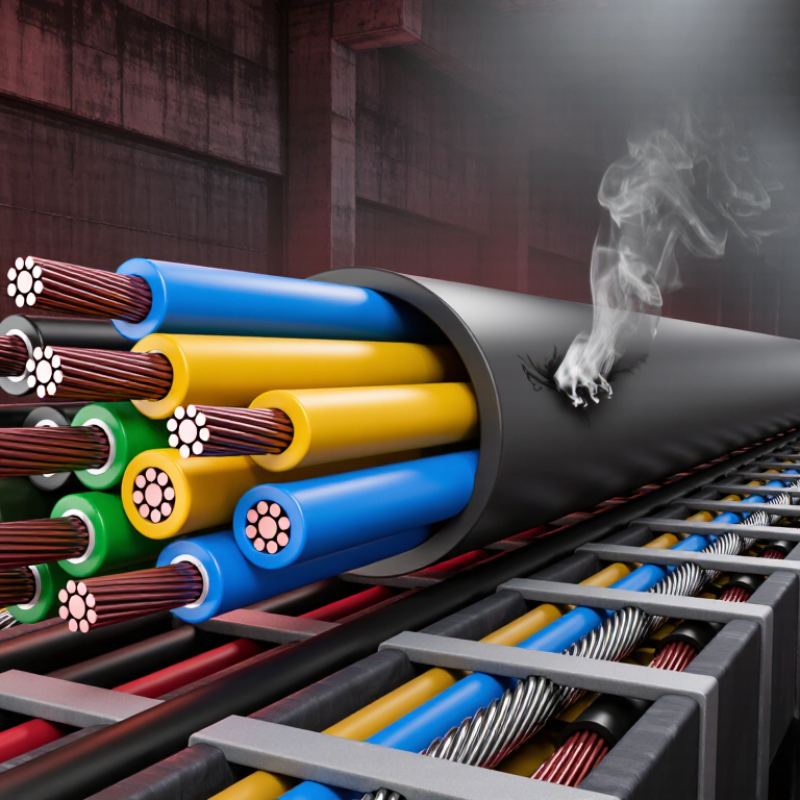
Selecting the right Flame Retardant Cable is a safety decision, not a simple product comparison. In a crowded cable tray, one failed jacket can produce dense smoke, corrosive gases, and rapid flame spread. The risk becomes more visible in hospitals, data centers, tunnels, factories, and high-rise buildings.
The National Fire Protection Association reported that electrical distribution and lighting equipment appeared in 24% of U.S. home structure fires from 2016 to 2020. That figure does not prove every incident began with a cable. It does show why cable construction deserves careful review. A flame-retardant label alone is not enough.
This guide presents seven practical selection tips. It considers conductor size, insulation material, smoke performance, installation environment, testing, certification, and supplier traceability. IEC 60332 flame tests help evaluate vertical flame propagation. IEC 60754 addresses halogen acid gas emissions, while IEC 61034 measures smoke density. For construction products in Europe, EN 50575 may also apply under the Construction Products Regulation.
Standards matter.
Real installations matter more.
A cable that passes one test may still perform poorly when bundled, bent tightly, or installed beside combustible materials. The UL 1685 standard, for example, evaluates flame propagation and smoke release under defined conditions. Those laboratory conditions cannot represent every jobsite. That limitation deserves honest attention.
Before purchasing, confirm the exact test method, voltage rating, temperature range, conductor material, and certificate validity. Check whether the supplier provides batch records and technical datasheets. A cheaper cable may reduce the initial invoice, yet replacement work can disrupt an entire facility. These seven tips aim to support safer, evidence-based decisions without treating any cable as completely fireproof.
Define Flame-Retardant Cable by IEC 60332-1-2 Flame-Spread Testing
7 Tips for Choosing Flame Retardant Cable
A flame-retardant cable should be defined by evidence, not by the label alone. IEC 60332-1-2 evaluates vertical flame spread on a single insulated wire or cable. The test uses a controlled 1 kW flame under specified laboratory conditions. It measures whether flames travel beyond the permitted area and how the specimen behaves after exposure.
Check the exact IEC 60332-1-2 test report. Confirm the tested cable matches the proposed conductor size, insulation, sheath, and construction. A larger cable may behave differently. Ask for the test date, laboratory details, standard edition, and specimen description. Do not guess. A real report is more useful than a sales phrase. Examine the cable’s markings, bending feel, sheath thickness, and installation instructions. These details often reveal mismatched products.
Remember that this test concerns one cable. It does not prove performance in dense cable bundles, tunnels, shafts, or poorly ventilated rooms. It also does not establish low smoke, low toxicity, circuit integrity, or fire resistance. It is not fireproof. Project conditions matter. Consider cable spacing, tray arrangement, ventilation, and nearby heat sources before selecting a type. In practice, installers sometimes focus only on conductor size and voltage rating. That is understandable, but incomplete. A careful choice links the IEC test result to the actual installation, then verifies every document before purchase.
Match Fire Performance to IEC 60332-3-24 Category C Cable Bundles
7 Tips for Choosing Flame Retardant Cable
Match Fire Performance to IEC 60332-3-24 Category C Cable Bundles
Cable selection should begin with the installed bundle, not a product label. IEC 60332-3-24 Category C evaluates vertical flame spread on bunched cables. Its test uses a 20.5 kW flame and 1.5 litres of non-metallic material per metre. The result reflects bundle behaviour under controlled conditions.
Measure the bundle. Confirm cable diameter, spacing, tray fill, and installation direction. Then check the exact test certificate. Do not assume a single-cable flame test proves Category C performance. Verify conductor size, insulation compound, sheath material, and production specification. Read the certificate carefully.
NFPA reported 1,388,500 fires in the United States during 2023, causing approximately 3,010 civilian deaths and 24.3 billion dollars in direct property damage.
These figures do not make every cable a fire source. They do show why early flame spread deserves practical attention. Category C is not a universal safety guarantee. Smoke density, toxic gases, circuit integrity, and fire stopping require separate assessment. Choose low-smoke construction when evacuation routes are enclosed. Check voltage, current, bending radius, and environmental exposure too. A compliant test sample can still fail an unsuitable installation. That is the uncomfortable part. Review the full cable schedule with a qualified fire and electrical engineer before purchase.
Sources: IEC 60332-3-24, Tests on Electric and Optical Fibre Cables Under Fire Conditions; NFPA, Fire Loss in the United States During 2023.
Screen Halogen and Smoke Risks: IEC 60754 and IEC 61034 Criteria
Choosing flame-retardant cable requires more than checking a “low-smoke” label. The IEC 60754 series measures gases released during combustion. IEC 60754-1 evaluates halogen acid gas emissions, while IEC 60754-2 checks acidity and conductivity. The commonly referenced limits are pH at least 4.3 and conductivity no higher than 10 μS/mm. These figures matter near sensitive equipment, metal structures, and emergency circuits.
Smoke needs separate verification. IEC 61034-2 uses a three-metre cube to measure light transmittance during cable burning. A 60% minimum transmittance value is widely used in project specifications. More visible air can help occupants find exits and help firefighters identify hazards. Less smoke is not automatically safer. Ask for the complete test report, including cable size, sample length, burning duration, and installation position. Small changes can affect results.
Field inspections often reveal a weak point: certificates may cover one construction, while the supplied cable uses another jacket or filler. Check the exact model, production batch, and applicable standard edition. Also review fire-growth data, such as heat release and flame spread, because IEC 60754 and IEC 61034 do not measure every fire risk. A report is useful evidence, not a guarantee. This is easy to forget. The better choice balances halogen acid gas, smoke density, flame spread, mechanical strength, and the building’s evacuation needs.
7 Tips for Choosing Flame Retardant Cable: Halogen and Smoke Risks
Key reference thresholds from IEC 60754-2 and IEC 61034-2 for evaluating corrosive halogen gases and smoke emission.
IEC 60754-2 commonly evaluates acidity and conductivity of gases released during combustion: pH should be at least 4.3 and conductivity should not exceed 10 μS/mm. IEC 61034-2 uses light transmittance to assess smoke density, with a commonly applied minimum of 60%. The numerical values use different units and should not be directly compared as performance scores; always confirm the applicable cable category, test edition, and project requirements.
Verify Voltage, Current Capacity, Bend Radius, and Installation Environment
Flame retardant cable selection starts with four practical checks: voltage, current capacity, bend radius, and environment. Choose a voltage rating above the system’s maximum operating voltage. This leaves room for switching surges and measurement errors. IEC 60287 provides methods for calculating cable current capacity. Do not trust ampere labels alone. Ambient temperature, conductor grouping, installation depth, and ventilation can reduce allowable current.
A 40-ampere circuit may need a larger conductor inside a crowded tray. Check correction factors before ordering.
NFPA’s Electrical Fires report estimates about 32,000 annual U.S. home structure fires. Electrical distribution and lighting equipment were involved during 2015–2019. The figures are a useful warning, not a complete design method. Flame retardance helps limit ignition spread, but it does not make overloaded cable safe.
Bend radius is equally important. Follow the cable datasheet, especially near glands, corners, and moving equipment. A sharp bend can damage insulation without leaving visible marks. Inspect the route before installation. Note water, oil, sunlight, dust, chemicals, vibration, and extreme temperatures. IEC 60332 flame tests can guide fire-performance selection, but the installation environment still decides suitability. I have seen tidy calculations fail because the real tray was hotter and tighter than expected. Recheck the site.