
Why Choose 304 Stainless Steel Angle for Global Projects?

Why Choose 304 Stainless Steel Angle for Global Projects?

Global construction projects demand materials that remain dependable across changing climates, transport conditions, and installation practices. 304 Stainless Steel Angle is often selected because it combines useful corrosion resistance, strength, clean appearance, and broad availability. It fits machine frames, equipment supports, architectural edges, shelves, and fabricated structures. A 3-meter length can move from a coastal warehouse to an inland plant without losing its practical value.

John C. Lippold, a recognized authority on stainless-steel welding, states, “Material performance depends on both alloy selection and fabrication practice.” This principle matters. A reliable 304 Stainless Steel Angle is not defined by its grade alone. Surface finish, thickness tolerance, cutting accuracy, weld quality, and packaging can influence final performance. Small details matter.

Real projects are rarely perfect.

Moisture may collect inside a joint. Salt dust may settle on an exposed edge. Poorly cleaned carbon-steel tools can leave contamination behind. These issues can create staining, even when the material specification is correct. 304 stainless steel also has limits in highly saline or chemically aggressive environments, where 316 may deserve closer review. That is an important correction to overly broad marketing claims.

Engineers should compare the service environment, load requirements, fabrication method, and maintenance plan before ordering. They should also request mill certificates and inspect dimensions upon delivery. With disciplined selection and honest evaluation, 304 Stainless Steel Angle can support durable, economical solutions for projects across borders.
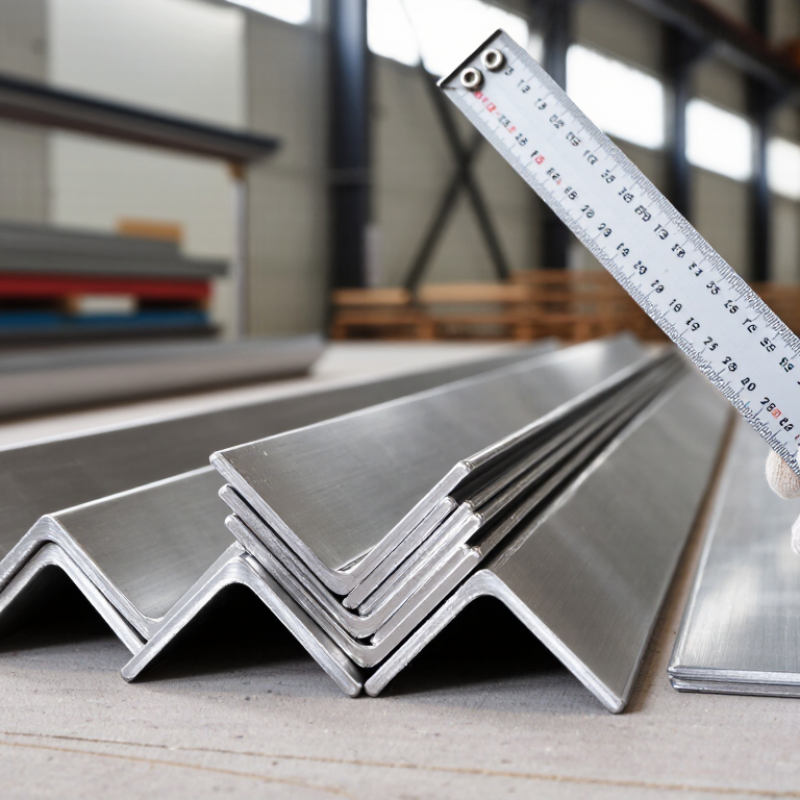
Why Choose 304 Stainless Steel Angle for Global Projects?

304 Stainless Steel Angle: Definition and ASTM A276 Product Scope

Why Choose 304 Stainless Steel Angle for Global Projects?

304 stainless steel angle is an L-shaped section made from austenitic stainless steel. It is L-shaped. The profile may have equal or unequal legs, depending on the project drawing. Its chromium content supports a passive surface film, while nickel improves toughness and formability. These properties suit platforms, frames, supports, food-processing areas, and architectural assemblies. However, 304 is not automatically suitable for every outdoor or coastal location.

ASTM A276 defines requirements for stainless steel bars and shapes, including applicable 304 material grades. Its scope addresses chemical composition, mechanical properties, heat treatment, and product dimensions. An angle supplied to ASTM A276 should have traceable test documentation and clear grade identification. That distinction matters. ASTM A276 is a material specification, not a complete structural design code. Engineers still need to verify loading, connection details, corrosion exposure, and fabrication procedures.

In practical procurement, buyers should confirm whether the angle is hot-finished or cold-finished. Surface condition can affect appearance, cleaning, and dimensional control. Welded assemblies may require suitable procedures to limit distortion and preserve corrosion performance. A common mistake is treating “304 stainless steel” as a universal corrosion solution. It is not. Chloride-rich environments may require a different grade or additional protection. Project teams should also check metric or imperial dimensions, tolerances, inspection records, and local acceptance requirements before production. Some specifications appear clear until these details are compared.

Chemical Composition: 18–20% Chromium, 8–10.5% Nickel, and ≤0.07% Carbon

Why Choose 304 Stainless Steel Angle for Global Projects?

Chemical Composition: 18–20% Chromium, 8–10.5% Nickel, and ≤0.07% Carbon

For global construction projects, 304 stainless steel angle offers a dependable balance of strength, formability, and corrosion resistance. Its chemistry explains much of this performance. Chromium creates a passive oxide layer that helps protect the surface from moisture and oxygen. Nickel improves ductility and supports stable performance during forming and temperature changes. Carbon remains at or below 0.07%, which helps reduce carbide precipitation during welding.

This matters on real project sites. I have seen angle sections used around equipment frames, access platforms, guards, and architectural supports. Clean surfaces usually remain bright after routine maintenance. That reduces repainting work in many indoor and outdoor applications. However, 304 is not a universal answer. Chloride-rich coastal air, salt spray, or chemical exposure may require a different grade. The environment must be reviewed carefully.

Composition alone does not prove quality. A reliable purchasing process checks mill certificates, heat numbers, dimensions, surface condition, and applicable standards. Welding procedures also need qualified control, especially on thick sections. Small mistakes can become expensive. In my experience, designers sometimes focus on alloy selection but overlook drainage, crevices, and contact with dissimilar metals. Those details can weaken corrosion performance. A practical specification should connect the 18–20% chromium, 8–10.5% nickel, and ≤0.07% carbon limits with the project’s actual service conditions.

Why Choose 304 Stainless Steel Angle for Global Projects?

Type 304 stainless steel is widely specified for structural and fabrication applications because its balanced chromium and nickel content supports corrosion resistance, formability, and weldability. The chart shows commonly specified chemical composition limits by weight, based on ASTM A240 Type 304 requirements. Carbon is shown as a maximum limit.

Mechanical Strength: 205 MPa Yield Strength and 515 MPa Tensile Strength

When global projects specify 304 stainless steel angle, mechanical strength often guides the initial decision. A typical minimum yield strength is 205 MPa, while tensile strength reaches 515 MPa. Yield strength indicates when permanent bending may begin. Tensile strength shows the material’s resistance before fracture. These values help engineers size supports, frames, brackets, and edge reinforcements under demanding loads.

In practical project reviews, I treat these figures as design inputs, not guarantees. Actual performance depends on thickness, forming direction, temperature, weld quality, and connection details. A thin angle can still deform if its unsupported length is excessive. That part is easy to overlook. Engineers should verify mill certificates, applicable standards, calculated loads, and safety factors before approval. Bolted holes also reduce the effective cross-section, which can change the load path. Poor alignment may create local stress concentrations.

304 stainless steel offers useful corrosion resistance in many atmospheric and industrial environments. However, it is not suitable for every chemical or marine exposure. Chloride-rich conditions deserve closer review. Surface contamination from carbon steel tools can also damage corrosion performance. In fabrication inspections, cleaning methods and heat-affected areas should be recorded. The 205 MPa and 515 MPa values provide a reliable reference, but they cannot replace project-specific engineering judgment. Sometimes, the specification looks strong on paper. Reality is less tidy.

Why Choose 304 Stainless Steel Angle for Global Projects? - Mechanical Strength: 205 MPa Yield Strength and 515 MPa Tensile Strength

Typical room-temperature properties for annealed 304 stainless steel. Actual values may vary by product form, thickness, heat treatment, and applicable specification.
Data Dimension Typical or Specified Value Why It Matters for Global Projects
Material Grade AISI 304 / UNS S30400 stainless steel A widely recognized austenitic stainless-steel grade for structural, architectural, food-processing, and general industrial applications.
Minimum Yield Strength 205 MPa Provides the minimum stress level at which permanent deformation begins, subject to the applicable material specification.
Minimum Tensile Strength 515 MPa Indicates the minimum ultimate tensile stress supported before fracture in standardized tensile testing.
Elongation at Break Approximately 40% minimum in 50 mm, depending on specification High ductility supports forming, fabrication, and resistance to sudden brittle failure.
Elastic Modulus Approximately 193 GPa Supports engineering calculations for deflection and stiffness under service loads.
Density Approximately 8.00 g/cm³ Allows accurate estimation of component weight, shipping loads, and installation requirements.
Poisson’s Ratio Approximately 0.29 Used with elastic modulus in structural and mechanical stress calculations.
Thermal Conductivity at 20°C Approximately 16.2 W/m·K Relevant to thermal bridges, heat-transfer design, and temperature-management assessments.
Mean Coefficient of Thermal Expansion Approximately 17.2 µm/m·K from 20–100°C Helps engineers evaluate thermal movement, expansion gaps, and connection stresses.
Melting Range Approximately 1,400–1,450°C Provides a reference for fabrication, welding, and high-temperature process planning.
Corrosion Resistance Good general atmospheric and moisture resistance Suitable for many indoor, architectural, and mildly corrosive environments; performance depends on exposure conditions and surface finish.
Magnetic Behavior Generally non-magnetic when fully annealed; may become slightly magnetic after cold working Important for equipment near magnetic fields and applications with electromagnetic requirements.
Fabrication Characteristics Good weldability and formability Supports common cutting, bending, drilling, and welding processes when suitable procedures and filler metals are selected.
Common Angle Applications Frames, brackets, supports, trims, platforms, guards, and architectural assemblies The equal- or unequal-leg angle profile provides practical edge reinforcement and load-support geometry.
Design Qualification Verify section size, thickness, load, buckling, welds, fasteners, and local project codes Material strength values alone do not replace project-specific structural calculations or compliance checks.

Fabrication Performance: About 40% Elongation and Excellent Weldability

Why Choose 304 Stainless Steel Angle for Global Projects?

Fabrication Performance: About 40% Elongation and Excellent Weldability

For global projects, 304 stainless steel angle offers a useful balance between strength, ductility, and fabrication speed. For flat products commonly used to make angles, ASTM A240/A240M specifies 40% minimum elongation in 50 mm for Type 304. This figure helps explain its forming performance. A 90-degree bend is less likely to crack when tooling, grain direction, and inside radius are properly controlled. Shop-floor results still vary with thickness and surface condition.

Welding is another practical advantage. AWS D1.6/D1.6M recognizes austenitic stainless steels as suitable for structural welding with qualified procedures. Clean edges, controlled heat input, and correct shielding gas reduce distortion and discoloration.

In many projects, 308L filler metal is selected for 304 joints. However, “excellent weldability” does not mean careless welding. Excessive heat can create warping, oxide scale, and difficult post-weld cleaning.

I would not design from the 40% value alone. Actual mill certificates, bend trials, and procedure qualification records deserve equal attention. One overlooked detail matters: carbon contamination from ordinary steel tools can later appear as rust staining.

Global Compliance: ASTM, EN 10088, JIS G4304, and ISO 3506 Standards

Why Choose 304 Stainless Steel Angle for Global Projects?

304 stainless steel angle is widely selected for frames, platforms, supports, and exposed architectural details. Its chromium content forms a protective passive layer against ordinary moisture and many atmospheric conditions. However, global compliance depends on more than the familiar “304” label. The purchase specification should identify chemistry, dimensions, tolerances, finish, and testing requirements.

ASTM requirements commonly reference ASTM A276 for wrought stainless bars and shapes. In Europe, EN 10088 identifies 304 as 1.4301 or X5CrNi18-10, with product requirements depending on the supply form. JIS G4304 covers hot-rolled stainless steel products, but an angle may need a more specific Japanese product standard. These standards are not interchangeable. That distinction is easy to miss.

ISO 3506 mainly addresses stainless steel fasteners, not structural angles. It can still matter when bolts, nuts, and washers connect the angle assembly. Experienced inspectors compare the heat number, mill certificate, chemical analysis, tensile results, and dimensional records. Positive material identification can also verify chromium and nickel content on arrival.

A certificate alone is not enough.

Site storage, salt exposure, welding heat, and surface contamination can change performance. I have seen compliant material fail expectations because fabrication details were ignored. The specification should state the exact standard edition and acceptance method before production begins.

Go to Top