Best PCB Test Equipment for Accurate Results in 2026?
In the evolving landscape of electronics manufacturing, the accuracy of PCB test equipment is paramount. As reported by IPC, the global PCB market is projected to reach $82.3 billion by 2026, highlighting the critical role of testing in ensuring product reliability. High-quality PCB test equipment is vital for detecting defects early, reducing potential costs associated with failures.
Recent studies indicate that over 55% of manufacturers face challenges related to testing efficiency. Reliable data from industry sources show that investing in the right testing tools can improve quality control processes, ensuring compliance with standards like IPC-6012. These tools not only enhance production workflows but also solidify a company’s reputation in a competitive market.
As technology advances, the demand for precise and innovative PCB test equipment increases. With trends leaning towards miniaturization and increased complexity, it’s crucial to select equipment tailored to specific testing needs. Continuous reflection on equipment performance and reliability is necessary. This need for precision drives ongoing research and development, aiming for better testing solutions. Understanding these dynamics will help guide decisions on the best PCB test equipment for accurate results in 2026.
Overview of PCB Testing and Its Importance in Electronics Manufacturing
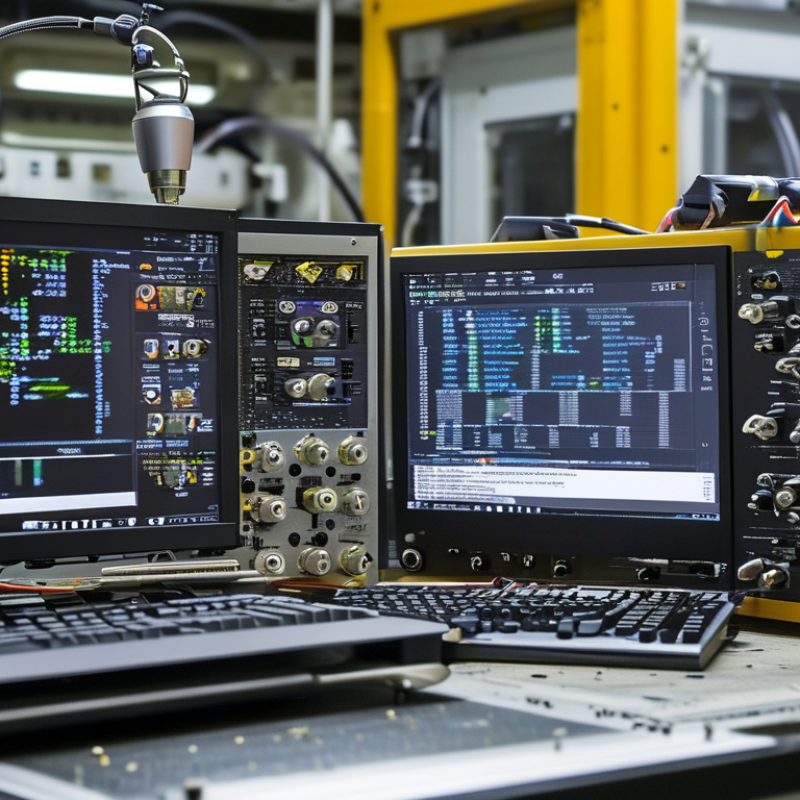
PCB testing plays a crucial role in electronics manufacturing. This process ensures that printed circuit boards function correctly and meet quality standards. Testing can identify defects early, saving time and resources. Accurate results are essential for reliability in electronic devices. A PCB failure can lead to costly product recalls and harm a brand's reputation.
Various testing methods exist, each with its strengths. Automated optical inspection (AOI) can quickly check for visible defects. Functional testing assesses if the PCB performs as intended. Boundary scan tests help evaluate complex connections without physical probing. However, these techniques also have limitations. Some defects may go unnoticed during fast inspections. A balance between speed and thoroughness is crucial.
Proper training and expertise are vital in PCB testing. Skilled technicians can interpret results accurately and suggest improvements. Continuous advancements in testing technology also contribute to better outcomes. However, staying updated can be challenging. Manufacturers must remain vigilant about adopting new methods while evaluating their effectiveness. Ensuring precise testing is an ongoing journey in electronics.
Best PCB Test Equipment for Accurate Results in 2026
Key Features to Look for in PCB Test Equipment for 2026
When considering PCB test equipment for 2026, accuracy is paramount. One key feature to look for is high measurement precision. Devices should offer a clear display of results, enabling easier interpretation of complex data. It’s also beneficial if the equipment can perform multiple tests simultaneously. This saves time and increases efficiency, which is crucial in a fast-paced environment.
Another important aspect is software integration. Good PCB test equipment should be compatible with advanced software tools. This allows for data logging and analysis, which enhances reliability. Intuitive user interfaces are also vital. They make the equipment easier to operate, even for those less experienced. However, striking a balance between functionality and usability is challenging. Overly complex systems can lead to user errors.
Portability is another consideration. Compact and lightweight equipment can significantly improve workflow. However, durability must not be compromised. Engineers often find that portable devices are less robust. Thus, finding equipment that can withstand harsh environments while being easy to transport can be quite the challenge. Testing for robustness under real-world conditions is essential for any serious buyer.
Top Recommended PCB Test Equipment Brands for Accurate Testing
When selecting PCB test equipment, accuracy is paramount. A range of brands provides reliable tools tailored to various testing needs.
It's essential to choose equipment that emphasizes precision, especially as technology advances. Testers must consider their specific
requirements, such as functionality and user-friendliness. A tool that suits one application may not work well for another. Each
brand often has niche strengths, from power analysis to signal integrity.
Some brands excel in durability and efficiency. This reliability allows engineers to trust the data produced. However, even top-rated
equipment can occasionally miss critical details. Regular calibration and maintenance are necessary for optimal performance. Users
should stay informed about the latest advancements in technology, as innovations can improve testing accuracy significantly.
In an industry focused on precision, understanding the strengths and weaknesses of various brands can lead to better decision-making.
Identifying gaps in your testing process can be enlightening. Continuous improvement in testing strategies is vital as the demand for
accuracy grows. Adapting tools and methodologies ensures that you remain competitive in the ever-evolving landscape of PCB design
and testing.
Emerging Technologies in PCB Testing Equipment
Emerging technologies in PCB testing equipment are revolutionizing how we ensure quality and reliability. Digital twins, for example, enable simulation of PCB behavior in virtual environments. This allows engineers to predict issues before physical prototypes are made. Rapid prototyping becomes more efficient, saving both time and resources.
Another innovation is automated optical inspection (AOI) systems. These systems use high-resolution cameras to detect even the smallest defects. They ensure that each PCB meets rigorous quality standards. However, there are challenges with false positives, which require expert review to address. While technology improves accuracy, human oversight remains essential for the best outcomes.
Machine learning is also making strides in PCB testing. By analyzing large data sets, algorithms can identify patterns that humans might miss. This leads to faster detection of anomalies and potential failures. Yet, reliance on technology raises concerns about understanding these systems. Engineers must balance automation with expertise to maintain quality control effectively.
Best PCB Test Equipment for Accurate Results in 2026
| Test Equipment Type |
Key Features |
Accuracy |
Price Range ($) |
Usage Context |
| Flying Probe Tester |
High-speed testing, minimal setup |
±0.5% |
10,000 - 50,000 |
Low to medium volume production |
| Automated Optical Inspection (AOI) |
Image capture and analysis for defects |
±0.3% |
15,000 - 100,000 |
High-volume production |
| X-ray Inspection |
Internal defect detection |
±0.5% |
20,000 - 150,000 |
Complex assemblies and BGA |
| Functional Testing |
Tests overall functionality |
±1% |
5,000 - 30,000 |
Final quality check before shipping |
| In-Circuit Testing (ICT) |
Tests individual components |
±0.2% |
20,000 - 120,000 |
High-volume electronic assemblies |
Trends Shaping the Future of PCB Test Equipment and Techniques
As the PCB industry evolves, the demand for advanced test equipment grows. In 2026, accurate testing will hinge on new technologies. Recent data from industry reports show that 70% of engineers prioritize precision in measurement. This shift emphasizes the importance of adopting innovative solutions to ensure reliability.
Emerging trends indicate a rise in automated testing methods, which can reduce human error. Reports suggest that automation can improve efficiency by up to 50%. Furthermore, advancements in AI-driven analytics will enhance defect detection capabilities. With these innovations, PCB manufacturers can respond to quality issues swiftly.
Despite the advantages, challenges remain. Many companies still rely on outdated equipment. This can lead to inconsistencies in testing results. Ensuring training for staff on new technologies will be crucial. The landscape of PCB test equipment is changing rapidly. Remaining adaptable is vital for success in this sector.