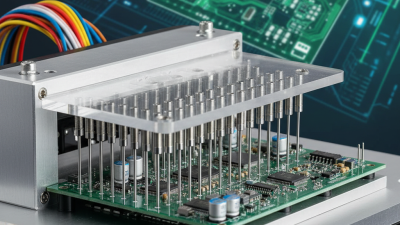
China’s bed of nails test fixture manufacturers serve electronics producers that need repeatable electrical checks across high-volume production runs. A fixture presses spring-loaded probes against designated test points, creating a fast connection for in-circuit or functional testing. Small details matter: probe spacing, plate alignment, wiring quality, and the force applied to a populated board. A few misaligned pins can cause false failures—or miss a real one.
Demand sits within a much larger electronics market. The World Semiconductor Trade Statistics (WSTS) Fall 2024 forecast projected global semiconductor sales of $697.2 billion in 2025, an 11.2% increase over 2024. That figure is not a direct measure of test-fixture demand, but it signals the scale of the production ecosystem these tools support. Still, fixture quality is difficult to judge from a catalog photo. Buyers should compare probe life, changeover time, documentation, and support for their specific board layout. Ask for a sample test report.
Details matter most. Not every low-cost fixture is a bargain, and not every premium quotation guarantees better uptime. The right manufacturer should explain its design choices, tolerances, and verification process in plain terms. For China-based suppliers, clear engineering communication and practical after-sales support deserve as much attention as price. There is no perfect checklist; boards, volumes, and test requirements differ. A careful comparison can reveal that gap.
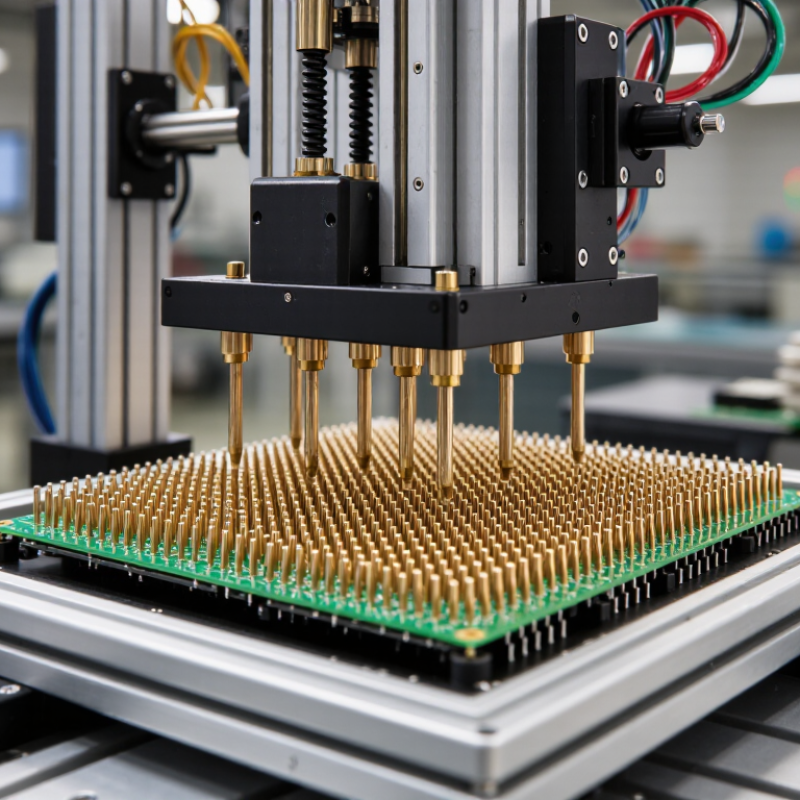
China Top Bed of Nails Test Fixture Manufacturers
What a Bed of Nails Test Fixture Is and How It Works
A bed of nails test fixture checks a circuit board through many spring-loaded pins. Each pin touches a specific test pad when the board is pressed into position. The pins connect to test equipment, which can check continuity, voltage, and selected signals. A hinged lid or clamp helps hold the board steady. The “nails” are usually rounded metal probes, not sharp points. Small details matter: a slightly misplaced pin can miss its test pad.
Tips: Keep test pads accessible and clearly spaced. Clean probe tips regularly, and check alignment before a test run.
During operation, the board is loaded into a nest shaped to fit its outline. The fixture closes, probes make contact, and the tester runs programmed checks. A failed reading may indicate a board fault, poor contact, or a worn probe. These causes can look alike, so operators should verify contact before rejecting a board. Fixture design also depends on board layout and test coverage. In practice, alignment is not always perfect, and pins wear over time. Regular inspection helps keep readings consistent.
A bed-of-nails fixture presses spring-loaded probes against a circuit board’s test points. The chart shows a typical test sequence; the 0/1 values are schematic states, not measured test data.
A bed-of-nails test fixture depends on accurate contact between its probes and the test points on a circuit board. A rigid base plate helps prevent movement, while guide plates keep spring-loaded pins aligned. That sounds simple. In practice, even a small pin offset can cause intermittent readings or missed contacts. Probe spacing, pin travel, and contact force should match the board layout and its components.
Electrical layout matters too. Short, organized signal paths can reduce unwanted interference, and a reliable ground connection supports consistent measurements. For dense boards, a carefully shaped support plate helps prevent flexing when the fixture closes. Operators also benefit from clear loading guides and a lid that applies even pressure. Small details count. A removable probe plate can make worn pins easier to replace, though it may add setup time.
Manufacturers in China may offer different fixture structures and levels of customization, so useful design reviews should focus on board drawings, test points, and expected production volume. A fixture may still need adjustment after its first build; pretending otherwise is not useful. Trial runs can reveal uneven contact, awkward loading, or pins that wear faster than expected. Those observations should guide practical revisions.
China’s bed of nails test fixture manufacturing landscape is shaped by varied production needs, from small engineering runs to repeat factory testing. Local manufacturers commonly build fixtures around a board’s test points, component heights, and expected electrical checks. A practical design uses spring-loaded pins, a stable support plate, and clear alignment features. Small details matter. A pin that sits slightly off target can create intermittent readings and slow troubleshooting.
Many workshops offer custom mechanical design, wiring, and fixture assembly under one roof. Buyers should look beyond quoted price and ask how a supplier verifies pin placement, contact repeatability, and wiring continuity. A useful review may include test-point maps, sample measurements, and a trial using the actual PCB. Photos help, but they are not enough. Fixture wear, operator handling, and board revisions can all affect performance. Requirements also differ between prototypes and busy production lines.
The landscape is not perfectly uniform. Some suppliers excel at quick modifications, while others are better equipped for detailed documentation or complex fixtures. This difference can be easy to miss during a brief sales discussion. I would treat promised cycle times cautiously until a sample build confirms them. Ask how replacement pins are identified, and whether the fixture can accommodate future board changes. A thoughtful evaluation saves time, though it cannot remove every maintenance issue.
Choosing a Chinese bed of nails test fixture manufacturer takes more than comparing quotations. Check whether the team can interpret your PCB files, test requirements, and production volume. Ask how they control probe spacing and alignment. A small positioning error can cause intermittent contact or damage delicate pads.
Request a design review before approving the fixture. Look for clear details on board support, replaceable probes, wiring, and access for maintenance. Ask for inspection records and a sample test report. If possible, review a prototype using your actual board. A neat enclosure is useful, but it does not prove reliable electrical contact. I would also check how the manufacturer handles drawing revisions; this step is easy to overlook.
Tips: Ask for evidence. Compare response quality, not just price. Confirm delivery milestones, acceptance criteria, and who will resolve problems after shipment. A supplier may promise fast delivery, yet unclear specifications can create delays. Be candid about what you still need to verify. That caution is practical, not pessimistic.
| Evaluation Dimension | What to Check | Evidence to Request | Practical Evaluation | Weight |
|---|---|---|---|---|
| Technical fit | Compatibility with the PCB, test points, board outline, test access, and intended electrical test process. | A reviewed interface document, fixture concept, and confirmation of supported tester connections and signal requirements. | Check the proposed design against the PCB files and test-point list before approving fabrication. | 25% |
| Design and documentation | Clarity of mechanical drawings, wiring information, component references, and revision control. | Dimensioned drawings, bill of materials, wiring or net mapping, revision history, and assembly instructions. | Confirm that documentation identifies the fixture revision and is sufficient for inspection and maintenance. | 15% |
| Contacting and alignment | Probe type and arrangement, board support, alignment features, and access to the required test points. | Probe schedule or equivalent contact details, locating-pin plan, support layout, and an inspection method for alignment. | Review a sample or prototype using the actual PCB; check for stable contact without board flex or interference. | 15% |
| Build quality and repeatability | Consistency of assembly, repeatable loading, and reliable contact over repeated operating cycles. | Inspection records, assembly checks, functional test results, and a defined method for evaluating repeated operation. | Run repeated load-and-test cycles with the same board and compare contact and test results. | 15% |
| Safety and usability | Operator access, pinch-point awareness, secure board loading, grounding provisions where required, and clear operating steps. | Operating instructions, safety review, grounding details where applicable, and information about any required interlocks. | Assess the fixture at the intended workstation and confirm that operators can load and unload boards consistently. | 10% |
| Communication and engineering support | Ability to clarify requirements, flag design risks, manage questions, and support changes during development. | A written question-and-answer log, named project contacts by role, and a documented change-approval process. | Use a sample technical question to assess the clarity and completeness of the response. | 10% |
| Delivery and change control | Schedule visibility, approval milestones, handling of design changes, and packaging suitable for transport. | A project schedule, milestone definitions, change records, and a packing or shipment checklist. | Confirm that the quotation separates design approval, build, inspection, and shipment milestones. | 10% |
| Total Evaluation Weight | 100% | |||
| Score | Rating Guide |
|---|---|
| 1 — Weak | Key requirements are unclear, unsupported, or not demonstrated with relevant documentation or testing. |
| 2 — Limited | Some requirements are addressed, but important details or verification evidence are missing. |
| 3 — Meets requirements | Requirements are addressed with adequate documentation and a reasonable verification plan. |
| 4 — Strong | Evidence is complete, risks are identified, and verification is clearly defined. |
| 5 — Excellent | Requirements are thoroughly documented, demonstrated, and supported by a clear process for revisions and ongoing maintenance. |
Use the weighted criteria to compare shortlisted suppliers against the same PCB data, test requirements, and acceptance checks. The table is an evaluation framework, not a ranking or performance claim about any specific manufacturer.
Bed-of-nails test fixtures provide repeatable electrical access to printed circuit boards during production testing. Spring-loaded probes contact selected pads, allowing checks for continuity, shorts, and component response. They are common in high-volume assembly, where operators may need to test many boards quickly. A fixture can also support functional tests when paired with suitable test equipment.
That matters.
The application should guide the fixture design. Probe positions must match the board layout, while clamps and supports should hold the board flat without stressing components. Poor alignment can cause intermittent readings or damage delicate pads.
Small details count.
Quality checks include probe travel, contact stability, wiring, and repeatability across repeated test cycles. Ask how the manufacturer verifies alignment and handles worn probes; practical answers are more useful than broad assurances. In my experience, teams sometimes focus too much on the first successful test. A fixture may still drift after frequent use.
Not always easy to predict.
Clear maintenance instructions and accessible replacement probes help keep results dependable. Test the fixture with representative boards before approving production use, and record any failures or awkward loading steps. Those details can reveal design weaknesses early.